

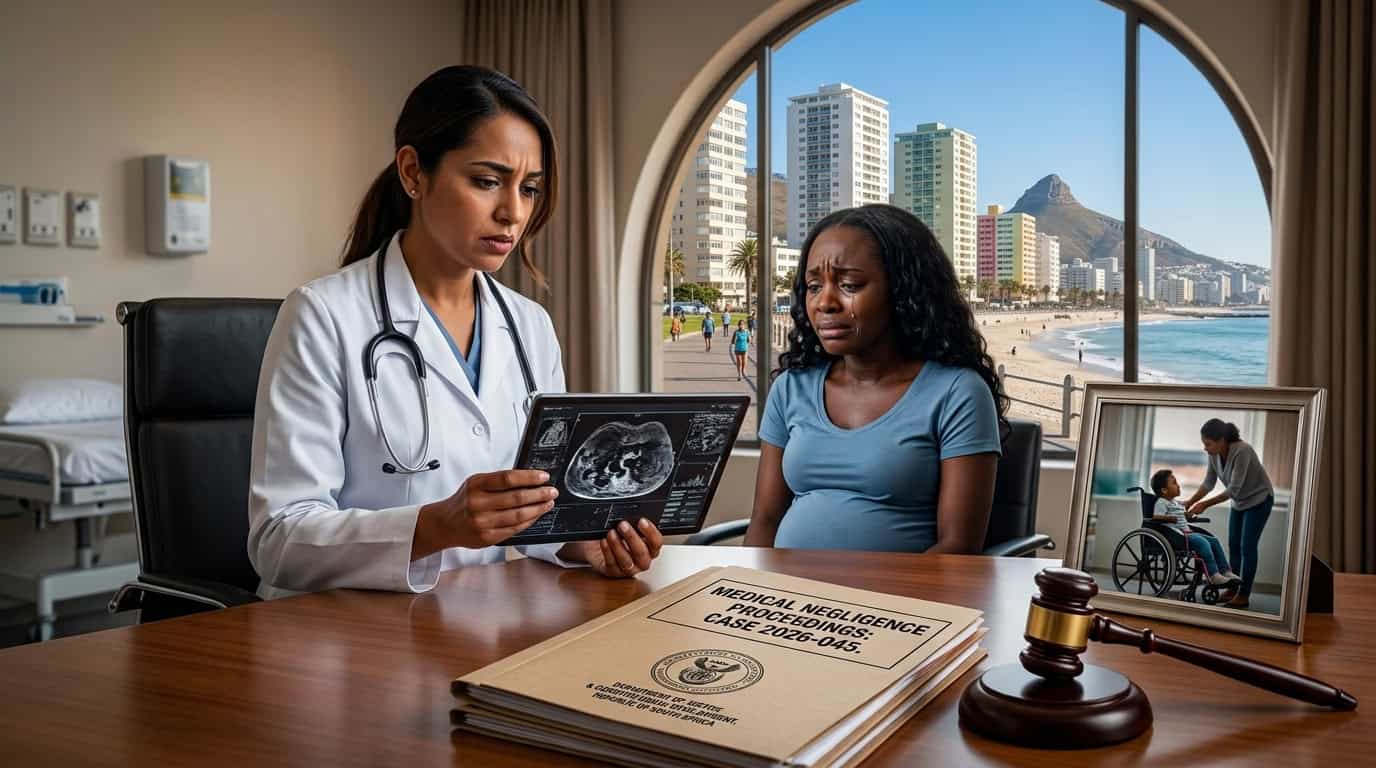
Pregnancy and childbirth are supposed to be life-changing for all the right reasons. But when something goes wrong because a healthcare professional may have failed to provide reasonable care, the consequences can be devastating.
Perhaps you underwent a sterilisation procedure but became pregnant anyway. Maybe a doctor failed to identify or properly communicate a serious condition affecting an unborn baby. In some circumstances, South African law allows parents to claim compensation for losses resulting from medical negligence.
You may hear terms such as “wrongful conception” and “wrongful birth” used to describe these cases. These aren’t separate laws or automatic legal claims. They are terms commonly used to describe particular types of claims arising from alleged medical negligence or, in some cases, breach of contract.
Here is what you need to know in plain English.
WRONGFUL CONCEPTION: WHEN A PREGNANCY WAS NOT PLANNED
A person may undergo a permanent contraceptive procedure, such as sterilisation, because they do not want to have any more children.
If the procedure is performed negligently, or the healthcare provider makes a negligent misrepresentation about its effectiveness, and an unwanted pregnancy and birth follow, a legal claim may potentially arise.
South African courts have recognised claims involving unsuccessful sterilisation procedures. In Administrator, Natal v Edouard, the court dealt with a claim arising from an unsuccessful sterilisation procedure and the expenses associated with the resulting child. Later cases have also considered claims involving wrongful conception and the legal principles surrounding them.
However, a pregnancy following contraception does not automatically mean that a doctor is legally liable.
The person bringing the claim would generally need to establish the requirements for liability. Depending on the circumstances, this can include proving that the healthcare provider acted wrongfully and negligently, that the conduct caused the relevant loss, and that the damages being claimed are legally recoverable.
The circumstances of each case therefore matter.
WHAT ABOUT A FAILED ABORTION?
A failed or unsuccessful termination of pregnancy does not automatically mean that a healthcare provider is liable for every consequence that follows.
The precise circumstances would have to be investigated. For example, questions could arise about what procedure was agreed upon, what information was provided, whether the appropriate standard of medical care was followed, whether the procedure was performed correctly, and whether any alleged negligence caused the loss being claimed.
This is why medical records and independent medical evidence can be extremely important.
WRONGFUL BIRTH: WHEN A SERIOUS CONDITION WAS NOT DETECTED OR EXPLAINED
Another type of claim can arise where parents allege that a healthcare professional negligently failed to identify or communicate a serious fetal abnormality or medical condition during pregnancy.
The issue is not that doctors are expected to detect every possible condition. Medicine cannot guarantee that every congenital abnormality or medical problem will be discovered before birth.
Rather, the question is whether the healthcare professional failed to provide the level of reasonable professional care that the circumstances required.
Where a serious condition should reasonably have been detected and properly communicated, and the failure deprived the mother of an opportunity to make an informed decision about whether to continue the pregnancy, a claim may potentially arise.
The South African Supreme Court of Appeal has recognised liability in circumstances involving a failure to provide information about a congenital condition where the mother would have terminated the pregnancy if she had been properly informed.
Importantly, however, parents do not automatically win a case simply because a child was born with a disability. Medical negligence, wrongfulness, causation and damages must still be established on the facts of the particular case.
WHAT CAN PARENTS CLAIM?
Where a claim is legally established, the damages will depend on the circumstances and the type of loss that can properly be attributed to the defendant’s conduct.
Depending on the case, this can include reasonable additional costs associated with caring for a child who has significant medical or disability-related needs.
The law does not simply treat the ordinary costs of raising a healthy child as automatically recoverable in every case. The nature and extent of the legally recognised loss must be determined according to the applicable legal principles and the evidence.
This distinction is important because every family and every medical-negligence case is different.
“WRONGFUL LIFE”: THE LAW IS NOT AS SETTLED AS YOU MAY THINK
This is where things become particularly complicated.
A “wrongful life” claim is different from a parent’s claim. It involves a child claiming that, because of medical negligence before birth, the child was born with a serious disability when the pregnancy could allegedly have been terminated if the condition had been detected and communicated.
In H v Fetal Assessment Centre, the Constitutional Court considered such a claim. The Court did not simply declare that South African children now have an established right to sue doctors for being born.
Instead, the Constitutional Court held that the child’s proposed claim was not necessarily inconceivable and that the matter should not have been dismissed at that early stage. The Court allowed the legal issues to be properly considered, including whether the common law should be developed in light of constitutional values.
That distinction is extremely important.
The Constitutional Court did not finally establish a general, automatic “wrongful life” cause of action.
WHAT IS THE POSITION IN 2026?
The legal position remains complicated.
The 2025 Supreme Court of Appeal decision in Oliver NO v MEC for Health: Western Cape Provincial Department of Health is particularly relevant. The court considered the litigation arising from the earlier Constitutional Court decision and confirmed the limited nature of what H v Fetal Assessment Centre had decided.
In other words, it would be wrong to tell the public that South African law has simply changed to say that every child born with a disability following an alleged prenatal medical error can now sue for “wrongful life”.
Whether such a claim can succeed depends on the particular facts and on difficult questions concerning wrongfulness, negligence, causation, harm and damages, as well as the possible development of the common law.
So if you come across an article claiming that “South Africa’s Constitutional Court has now made wrongful-life claims legal”, treat that statement with caution. It is an oversimplification of what the Court actually decided.
YOU DON’T HAVE TO PROVE THAT THE DOCTOR CAUSED THE DISABILITY
This is another important point.
In many of these cases, the alleged medical negligence did not cause the baby’s underlying genetic or congenital condition.
Instead, the allegation may be that the healthcare professional failed to detect or communicate the condition, and that this failure deprived the mother of an opportunity to make an informed decision about the pregnancy.
That creates difficult legal questions about causation and damages.
It is one of the reasons these cases can become highly technical and require expert medical evidence.
WHAT SHOULD YOU DO IF YOU THINK A MEDICAL MISTAKE OCCURRED?
If you believe that a medical practitioner, hospital or other healthcare provider may have made a serious mistake during pregnancy, don’t rely solely on internet information to decide whether you have a case.
Start by obtaining your relevant medical records and keeping copies of reports, scans, test results, prescriptions, correspondence and other documentation relating to the pregnancy and treatment.
Then speak to an attorney experienced in medical negligence and personal injury law.
The attorney may need to obtain independent medical opinions to determine whether the treatment fell below the required standard and whether the alleged failure caused a legally recognised loss.
THERE MAY ALSO BE TIME LIMITS
Don’t leave the matter for years without obtaining legal advice.
Prescription rules can affect medical-negligence claims, and the position can differ depending on the nature of the claim, the parties involved and the circumstances of the case. Claims involving minors can also raise different prescription considerations.
If a state hospital or other organ of state is involved, additional procedural requirements may apply.
For that reason, getting advice early is sensible even if you are still unsure whether you have a claim.
THE BOTTOM LINE
A medical mistake during pregnancy can have enormous emotional and financial consequences. South African law does provide routes for certain claims arising from negligent medical treatment, including recognised claims involving unsuccessful sterilisation and certain claims by parents following failures to identify or communicate serious fetal abnormalities.
But there is no automatic payout simply because a pregnancy was unwanted or a child was born with a disability.
Each case depends on its facts, the medical evidence, the applicable legal principles and proof of the losses suffered.
And when it comes to “wrongful life” claims by children themselves, the law should not be described as settled. The Constitutional Court left open the possibility for the common law to develop. At the same time, the later Supreme Court of Appeal decision confirms that H v Fetal Assessment Centre did not itself create a general, established wrongful-life cause of action.
If you believe a medical mistake affected your pregnancy or your child’s health, speak to a South African attorney experienced in medical negligence as soon as reasonably possible. The sooner the medical records and evidence are secured, the better positioned you will be to understand what happened and whether the law provides a remedy.
Contact our experienced medical law attorneys for expert guidance and support. We’re here to help you understand your options and fight for the compensation you deserve.


Recent Comments